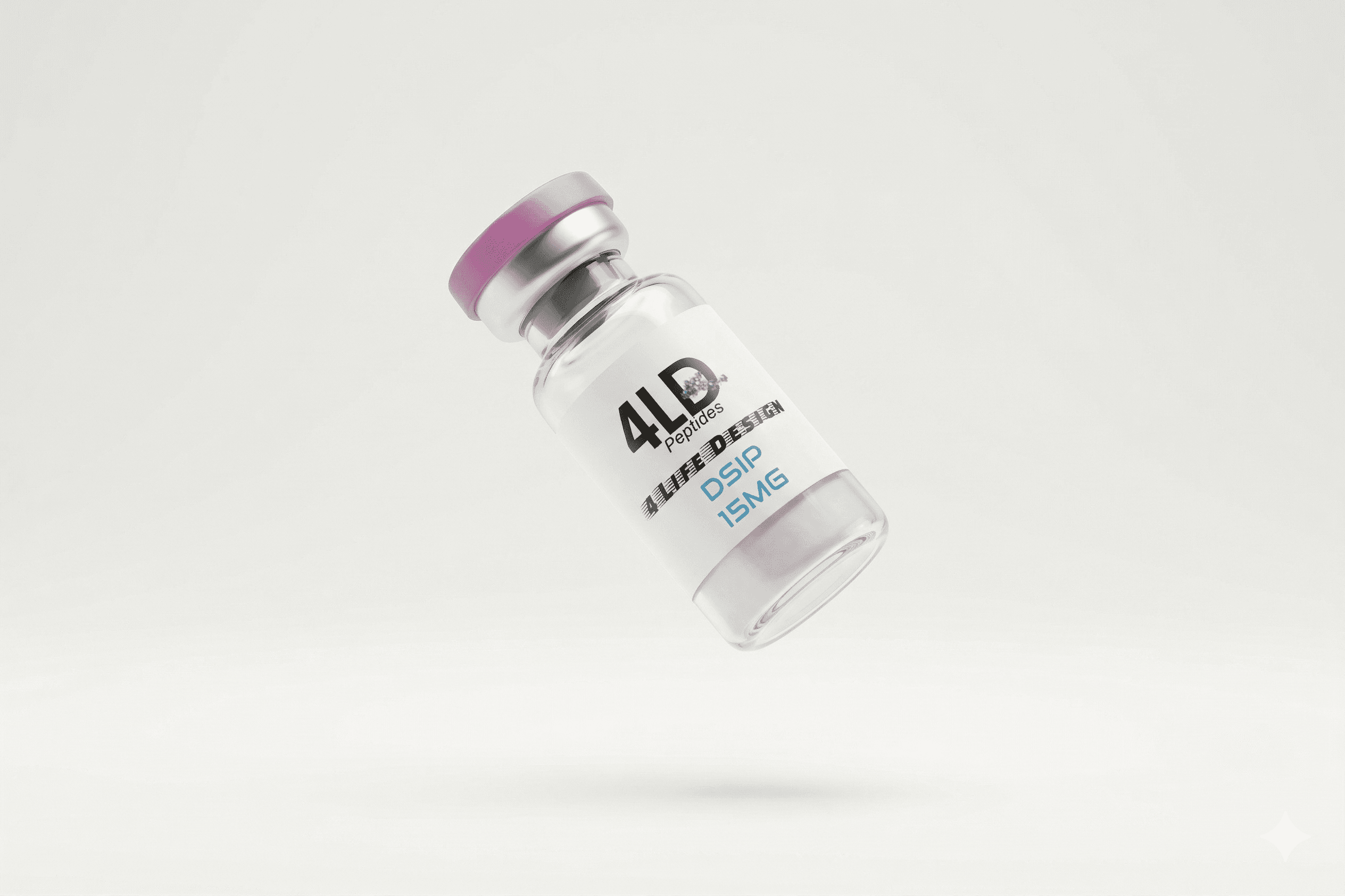
DSIP (Delta Sleep Inducing Peptide) — Research Overview
Delta Sleep-Inducing Peptide (DSIP) is a naturally occurring neuropeptide first detected in rabbit brain tissue in 1963 and later isolated from cerebral venous blood in 1977. Subsequent research established that DSIP is synthesized in the hypothalamus and is present in measurable concentrations in blood plasma, with levels varying throughout the day. Laboratory studies have confirmed its ability to cross the blood-brain barrier and its stability in the gastrointestinal environment. Available from 4-LD in 5mg lyophilized form, DSIP is produced under quality-controlled conditions exclusively for qualified researchers and laboratory professionals conducting in-vitro and controlled research applications.
DSIP has been studied across several active research areas. In sleep and neurological research, preclinical and clinical studies have examined its effects on delta-wave activity, slow-wave sleep, REM sleep, and non-REM sleep patterns in both animal models and human subjects, with studies suggesting associations between DSIP levels and sleep efficiency, sleep latency, and sleep duration. In psychiatric research, clinical investigations have examined cerebrospinal fluid levels of DSIP in subjects with schizophrenia and major depressive disorder, with findings indicating lower CSF concentrations of DSIP in these populations compared to healthy controls. In pain and autonomic research, preclinical studies have explored its potential influence on pain perception across chronic pain models, as well as its effects on cardiovascular regulation including heart rate and blood pressure in animal subjects. In substance research, clinical studies have examined DSIP in the context of opiate and alcohol withdrawal protocols. In endocrine research, preclinical models have investigated its interaction with somatostatin release through dopaminergic mechanisms. All findings referenced are from preclinical and clinical studies conducted under controlled research conditions. This product is intended solely for laboratory research by qualified professionals and is not for human or animal consumption. 4-LD makes no therapeutic claims regarding this compound.
dsip-5mg
dsip-5mg
dsip-5mg
dsip-5mg
dsip-5mg
Warranty
Shipping details
Customer support
Loading stock...
DSIP (Delta Sleep Inducing Peptide) — Research Overview
Delta Sleep-Inducing Peptide (DSIP) is a naturally occurring neuropeptide first detected in rabbit brain tissue in 1963 and later isolated from cerebral venous blood in 1977. Subsequent research established that DSIP is synthesized in the hypothalamus and is present in measurable concentrations in blood plasma, with levels varying throughout the day. Laboratory studies have confirmed its ability to cross the blood-brain barrier and its stability in the gastrointestinal environment. Available from 4-LD in 5mg lyophilized form, DSIP is produced under quality-controlled conditions exclusively for qualified researchers and laboratory professionals conducting in-vitro and controlled research applications.
DSIP has been studied across several active research areas. In sleep and neurological research, preclinical and clinical studies have examined its effects on delta-wave activity, slow-wave sleep, REM sleep, and non-REM sleep patterns in both animal models and human subjects, with studies suggesting associations between DSIP levels and sleep efficiency, sleep latency, and sleep duration. In psychiatric research, clinical investigations have examined cerebrospinal fluid levels of DSIP in subjects with schizophrenia and major depressive disorder, with findings indicating lower CSF concentrations of DSIP in these populations compared to healthy controls. In pain and autonomic research, preclinical studies have explored its potential influence on pain perception across chronic pain models, as well as its effects on cardiovascular regulation including heart rate and blood pressure in animal subjects. In substance research, clinical studies have examined DSIP in the context of opiate and alcohol withdrawal protocols. In endocrine research, preclinical models have investigated its interaction with somatostatin release through dopaminergic mechanisms. All findings referenced are from preclinical and clinical studies conducted under controlled research conditions. This product is intended solely for laboratory research by qualified professionals and is not for human or animal consumption. 4-LD makes no therapeutic claims regarding this compound.
Discreet shipping
Fast shipping
High Quality
