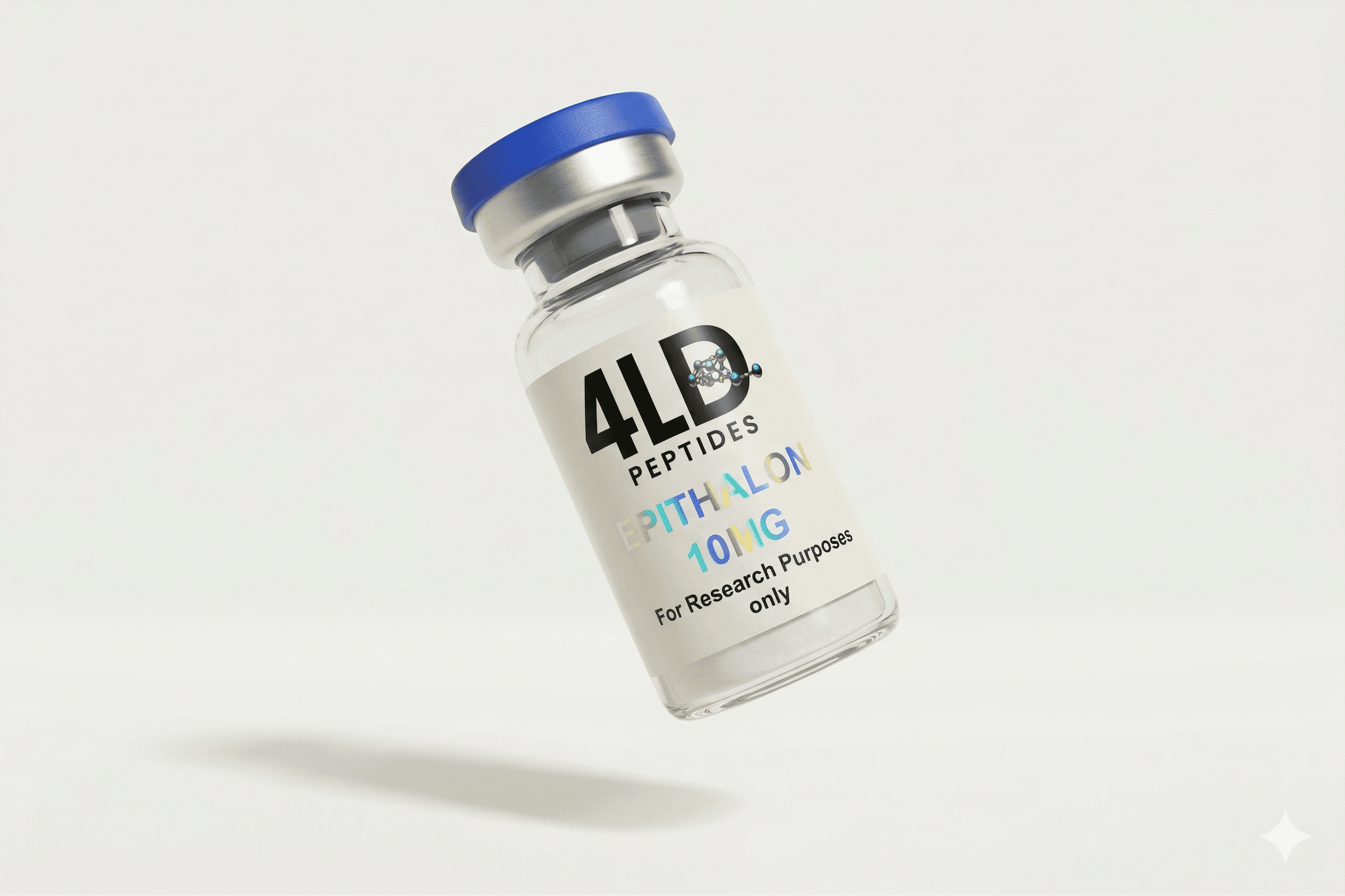
Epitalon — Research Overview
Paragraph 1: Epitalon (also known as Epithalon or Epithalone) is a synthetic tetrapeptide with the sequence Ala-Glu-Asp-Gly, originally derived from the pineal gland peptide epithalamin. This compound has emerged as one of the more actively studied peptides in anti-aging, telomere biology, and circadian rhythm research. Its primary mechanism of interest in laboratory settings involves the activation of telomerase enzyme expression and modulation of gene expression through epigenetic pathways, making it a widely referenced compound in studies examining cellular senescence, age-related degeneration, and longevity models. Available from 4-LD in 10mg lyophilized form, Epithalon is produced under quality-controlled conditions exclusively for qualified researchers and laboratory professionals conducting in-vitro and controlled research applications.
Areas of Active Research
Epithalon has been studied across several active research areas. In telomere and cellular aging research, in-vitro studies using human fetal fibroblast cultures have examined its effects on telomere length and cell division capacity, with findings suggesting associations between Epithalon exposure and telomerase activation through TERT gene expression. In longevity and lifespan research, rodent and Drosophila melanogaster models have been used to examine its potential effects on lifespan extension, tumor incidence reduction, and delayed age-related pathology. In circadian and endocrine research, primate studies have investigated its influence on melatonin rhythm restoration and antioxidant status in aged subjects. In ocular research, animal models have explored its potential role in retinal protection, photoreceptor preservation, and age-related macular degeneration pathways. In neurological research, transgenic animal models have examined its potential effects on amyloid-beta accumulation, cognitive performance, and neurogenesis in aged subjects. All findings referenced are from preclinical and in-vitro studies conducted under controlled research conditions. This product is intended solely for laboratory research by qualified professionals and is not for human or animal consumption. 4-LD makes no therapeutic claims regarding this compound.
epithalon-50mg
epithalon-50mg
epithalon-50mg
epithalon-50mg
epithalon-50mg
Warranty
Shipping details
Customer support
Loading stock...
Epitalon — Research Overview
Paragraph 1: Epitalon (also known as Epithalon or Epithalone) is a synthetic tetrapeptide with the sequence Ala-Glu-Asp-Gly, originally derived from the pineal gland peptide epithalamin. This compound has emerged as one of the more actively studied peptides in anti-aging, telomere biology, and circadian rhythm research. Its primary mechanism of interest in laboratory settings involves the activation of telomerase enzyme expression and modulation of gene expression through epigenetic pathways, making it a widely referenced compound in studies examining cellular senescence, age-related degeneration, and longevity models. Available from 4-LD in 10mg lyophilized form, Epithalon is produced under quality-controlled conditions exclusively for qualified researchers and laboratory professionals conducting in-vitro and controlled research applications.
Areas of Active Research
Epithalon has been studied across several active research areas. In telomere and cellular aging research, in-vitro studies using human fetal fibroblast cultures have examined its effects on telomere length and cell division capacity, with findings suggesting associations between Epithalon exposure and telomerase activation through TERT gene expression. In longevity and lifespan research, rodent and Drosophila melanogaster models have been used to examine its potential effects on lifespan extension, tumor incidence reduction, and delayed age-related pathology. In circadian and endocrine research, primate studies have investigated its influence on melatonin rhythm restoration and antioxidant status in aged subjects. In ocular research, animal models have explored its potential role in retinal protection, photoreceptor preservation, and age-related macular degeneration pathways. In neurological research, transgenic animal models have examined its potential effects on amyloid-beta accumulation, cognitive performance, and neurogenesis in aged subjects. All findings referenced are from preclinical and in-vitro studies conducted under controlled research conditions. This product is intended solely for laboratory research by qualified professionals and is not for human or animal consumption. 4-LD makes no therapeutic claims regarding this compound.
Discreet shipping
Fast shipping
High Quality
