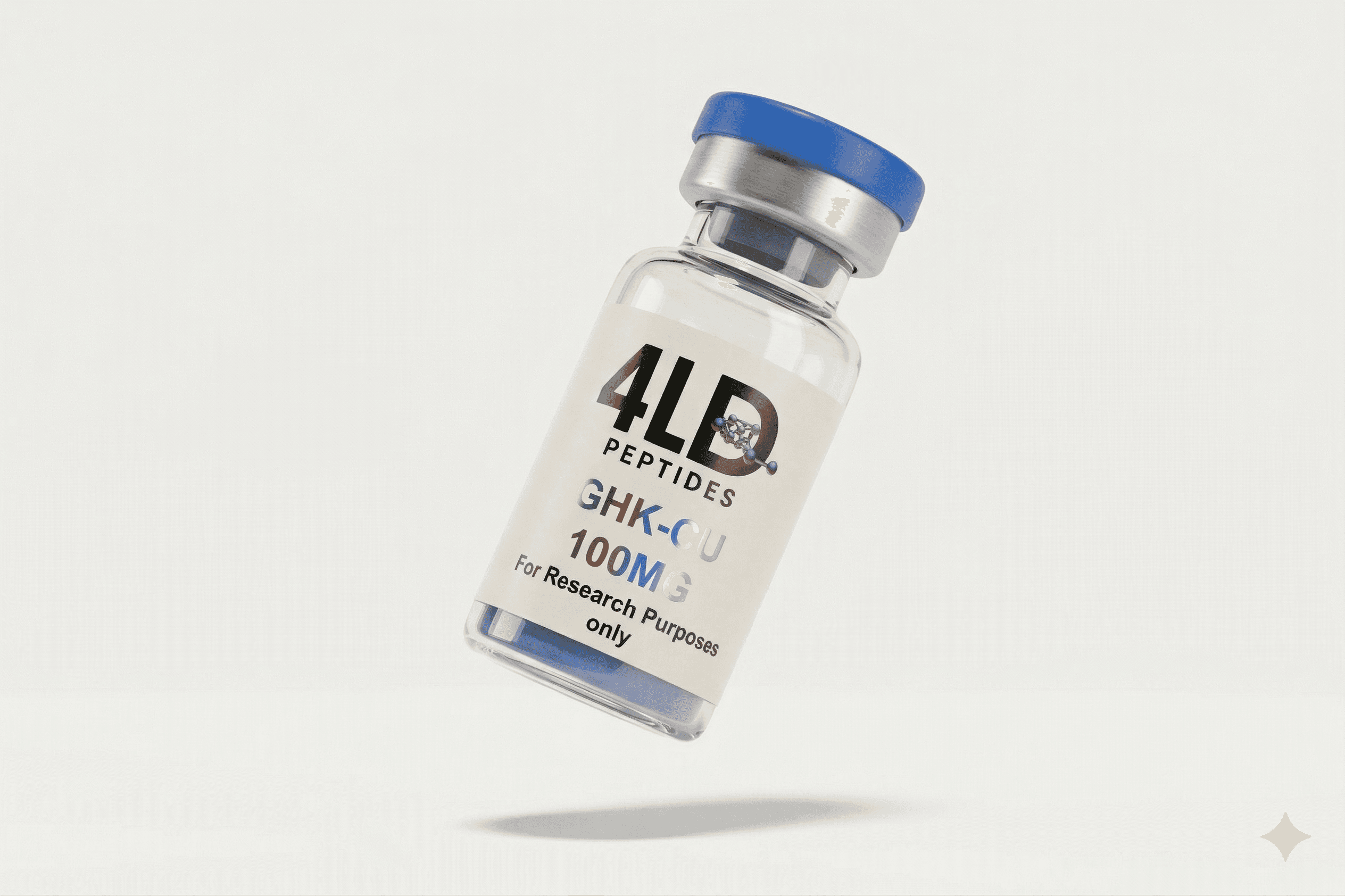
GHK-Cu Copper Peptide — Research Overview
GHK-Cu is a naturally occurring copper peptide complex composed of glycyl-L-histidyl-L-lysine, a tripeptide found in human blood, saliva, and urine. This compound has been extensively studied in laboratory settings for its broad range of biological activity across multiple tissue systems. Research has examined its role in fibroblast recruitment, extracellular matrix remodeling, collagen synthesis, angiogenesis, and gene expression modulation. Its naturally occurring presence in the body and measurable decline with age have made it a compound of significant interest in anti-aging, wound healing, and neurological research. Available from 4-LD in 50mg lyophilized form, GHK-Cu is produced under quality-controlled conditions exclusively for qualified researchers and laboratory professionals conducting in-vitro research applications.
Areas of Active Research
GHK-Cu has been studied across several active research areas. In tissue regeneration and wound healing research, laboratory studies have examined its role in attracting fibroblasts and immune cells to sites of tissue damage, stimulating collagen synthesis, and supporting extracellular matrix remodeling in wound models including studies involving diabetic ulcer models and open wound recovery. In angiogenesis research, studies have investigated its potential to stimulate blood vessel growth and improve nutrient delivery to damaged tissue in controlled laboratory settings. In antimicrobial research, preclinical studies have explored its activity against bacteria and fungi when combined with fatty acids, with findings suggesting potential relevance to infection prevention in wound healing models. In pain and amino acid research, animal model studies have examined its effects on L-lysine and L-arginine levels and their downstream relationship to nitric oxide synthesis and pain signaling pathways. In neurological research, studies have investigated GHK-Cu concentrations in central nervous system tissue and its potential role in nerve growth promotion, neuroinflammation reduction, and gene expression modulation associated with neurodegenerative conditions. All findings referenced are from preclinical and in-vitro studies. This product is intended solely for laboratory research by qualified professionals and is not for human or animal consumption. 4-LD makes no therapeutic claims regarding this compound.
ghk-cu-100mg
ghk-cu-100mg
ghk-cu-100mg
ghk-cu-100mg
ghk-cu-100mg
Warranty
Shipping details
Customer support
Loading stock...
GHK-Cu Copper Peptide — Research Overview
GHK-Cu is a naturally occurring copper peptide complex composed of glycyl-L-histidyl-L-lysine, a tripeptide found in human blood, saliva, and urine. This compound has been extensively studied in laboratory settings for its broad range of biological activity across multiple tissue systems. Research has examined its role in fibroblast recruitment, extracellular matrix remodeling, collagen synthesis, angiogenesis, and gene expression modulation. Its naturally occurring presence in the body and measurable decline with age have made it a compound of significant interest in anti-aging, wound healing, and neurological research. Available from 4-LD in 50mg lyophilized form, GHK-Cu is produced under quality-controlled conditions exclusively for qualified researchers and laboratory professionals conducting in-vitro research applications.
Areas of Active Research
GHK-Cu has been studied across several active research areas. In tissue regeneration and wound healing research, laboratory studies have examined its role in attracting fibroblasts and immune cells to sites of tissue damage, stimulating collagen synthesis, and supporting extracellular matrix remodeling in wound models including studies involving diabetic ulcer models and open wound recovery. In angiogenesis research, studies have investigated its potential to stimulate blood vessel growth and improve nutrient delivery to damaged tissue in controlled laboratory settings. In antimicrobial research, preclinical studies have explored its activity against bacteria and fungi when combined with fatty acids, with findings suggesting potential relevance to infection prevention in wound healing models. In pain and amino acid research, animal model studies have examined its effects on L-lysine and L-arginine levels and their downstream relationship to nitric oxide synthesis and pain signaling pathways. In neurological research, studies have investigated GHK-Cu concentrations in central nervous system tissue and its potential role in nerve growth promotion, neuroinflammation reduction, and gene expression modulation associated with neurodegenerative conditions. All findings referenced are from preclinical and in-vitro studies. This product is intended solely for laboratory research by qualified professionals and is not for human or animal consumption. 4-LD makes no therapeutic claims regarding this compound.
Discreet shipping
Fast shipping
High Quality
