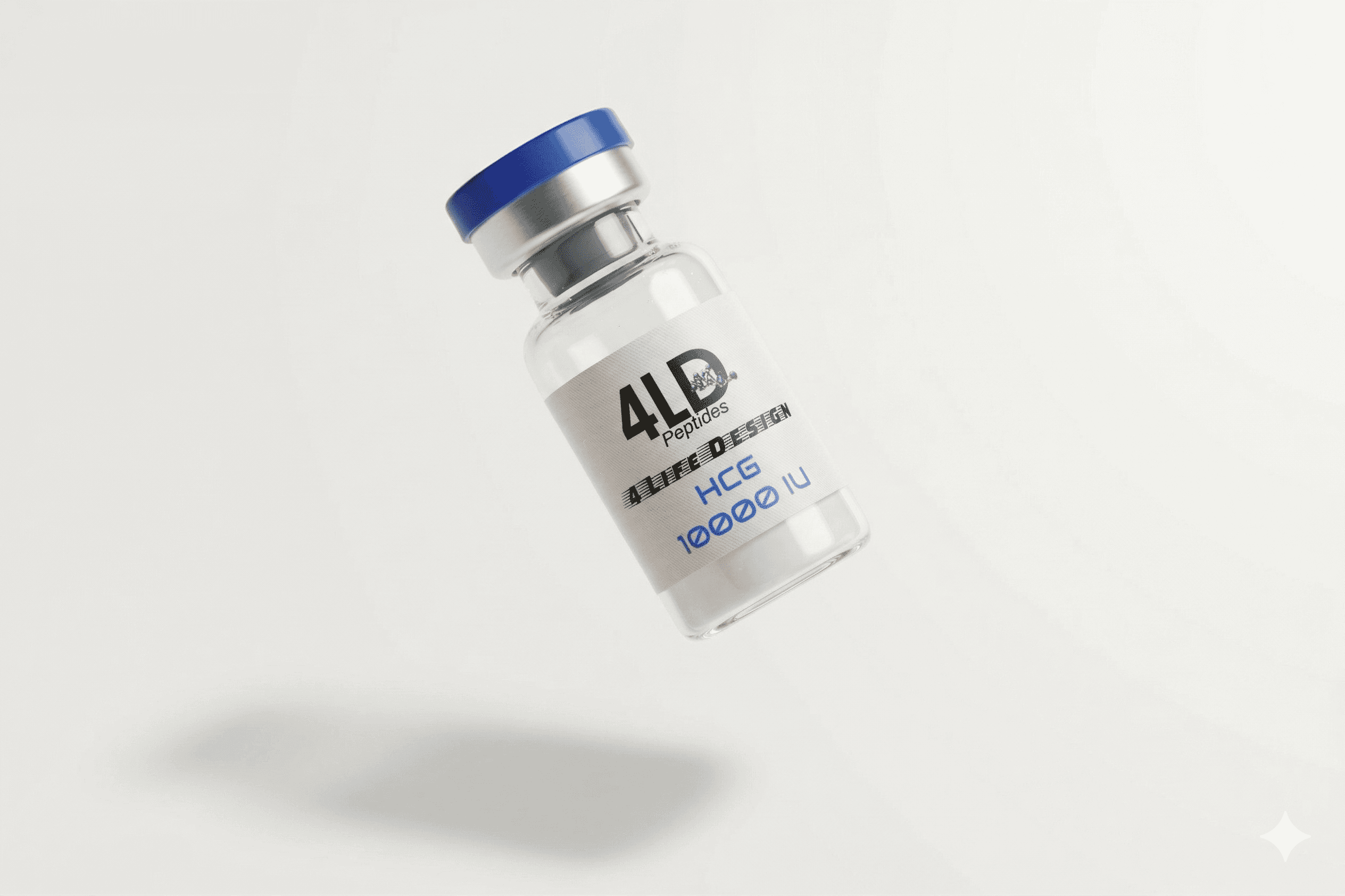
HCG (Human Chorionic Gonadotropin) — Research Overview
Human Chorionic Gonadotropin (HCG) is a glycoprotein hormone composed of two non-covalently bound subunits — an alpha subunit shared with other glycoprotein hormones including LH, FSH, and TSH, and a unique beta subunit that confers its biological specificity. In laboratory research settings, HCG is studied primarily for its ability to bind and activate the luteinizing hormone receptor (LHR) with high affinity, making it a widely used research tool for investigating gonadotropin signaling pathways, steroidogenesis, and reproductive physiology across multiple species. Its significantly longer half-life compared to endogenous LH has made it particularly useful in research protocols examining sustained gonadotropin receptor activation and its downstream effects on gonadal tissue. Available from 4-LD in lyophilized form, HCG is produced under quality-controlled conditions exclusively for qualified researchers and laboratory professionals conducting in-vitro and controlled research applications.
Areas of Active Research
HCG has been studied across several active research areas. In reproductive endocrinology research, animal models and cell culture studies have examined its role in triggering the LH surge equivalent for ovulation induction, with studies in rodent and primate models investigating its effects on follicular maturation, corpus luteum formation, and progesterone production in female reproductive tissue. In testicular and steroidogenesis research, Leydig cell models have extensively studied its role in stimulating testosterone biosynthesis through LHR activation and downstream cAMP signaling, with findings used to model gonadotropin-dependent androgen production in both normal and hypogonadal states. In fertility research, animal models have investigated its use in controlled ovarian stimulation protocols, examining its influence on oocyte maturation, implantation support, and early pregnancy maintenance through progesterone pathway activation. In male reproductive research, studies have examined its effects on spermatogenesis support, testicular volume maintenance, and intratesticular testosterone concentration in models of gonadotropin suppression. All findings referenced are from preclinical and in-vitro studies. This product is intended solely for laboratory research by qualified professionals and is not for human or animal consumption. 4-LD makes no therapeutic claims regarding this compound.
hcg-10-000-iu
hcg-10-000-iu
hcg-10-000-iu
hcg-10-000-iu
hcg-10-000-iu
Warranty
Shipping details
Customer support
Loading stock...
HCG (Human Chorionic Gonadotropin) — Research Overview
Human Chorionic Gonadotropin (HCG) is a glycoprotein hormone composed of two non-covalently bound subunits — an alpha subunit shared with other glycoprotein hormones including LH, FSH, and TSH, and a unique beta subunit that confers its biological specificity. In laboratory research settings, HCG is studied primarily for its ability to bind and activate the luteinizing hormone receptor (LHR) with high affinity, making it a widely used research tool for investigating gonadotropin signaling pathways, steroidogenesis, and reproductive physiology across multiple species. Its significantly longer half-life compared to endogenous LH has made it particularly useful in research protocols examining sustained gonadotropin receptor activation and its downstream effects on gonadal tissue. Available from 4-LD in lyophilized form, HCG is produced under quality-controlled conditions exclusively for qualified researchers and laboratory professionals conducting in-vitro and controlled research applications.
Areas of Active Research
HCG has been studied across several active research areas. In reproductive endocrinology research, animal models and cell culture studies have examined its role in triggering the LH surge equivalent for ovulation induction, with studies in rodent and primate models investigating its effects on follicular maturation, corpus luteum formation, and progesterone production in female reproductive tissue. In testicular and steroidogenesis research, Leydig cell models have extensively studied its role in stimulating testosterone biosynthesis through LHR activation and downstream cAMP signaling, with findings used to model gonadotropin-dependent androgen production in both normal and hypogonadal states. In fertility research, animal models have investigated its use in controlled ovarian stimulation protocols, examining its influence on oocyte maturation, implantation support, and early pregnancy maintenance through progesterone pathway activation. In male reproductive research, studies have examined its effects on spermatogenesis support, testicular volume maintenance, and intratesticular testosterone concentration in models of gonadotropin suppression. All findings referenced are from preclinical and in-vitro studies. This product is intended solely for laboratory research by qualified professionals and is not for human or animal consumption. 4-LD makes no therapeutic claims regarding this compound.

Discreet shipping
Fast shipping
High Quality
