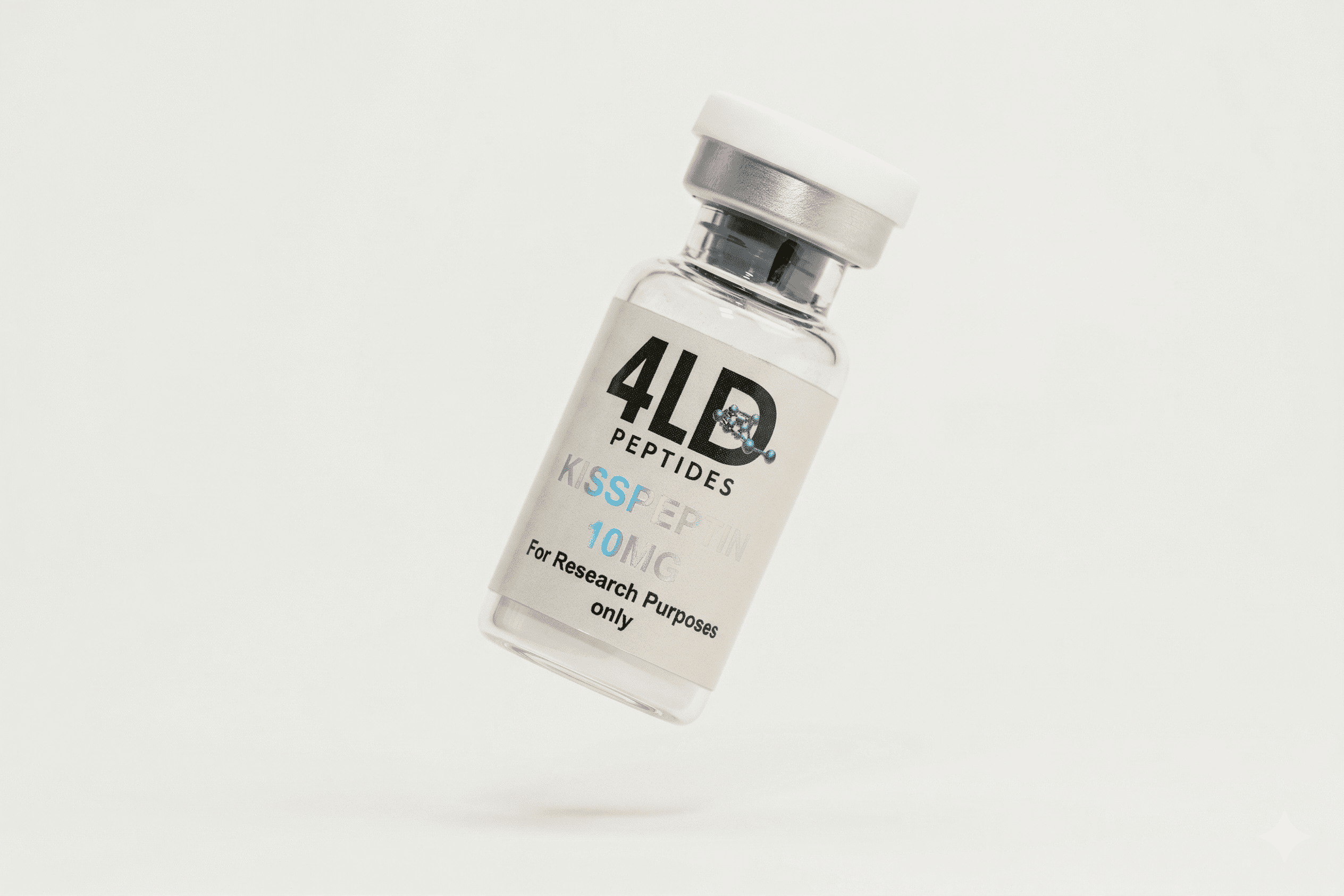
Kisspeptin — Research Overview
Kisspeptin (Metastin 45-54) is a decapeptide fragment of the full-length kisspeptin-1 protein and serves as the endogenous ligand for the GPR54 receptor, also known as KISS1R. This neuropeptide has been identified in research as a primary regulator of the hypothalamic-pituitary-gonadal (HPG) axis, with laboratory studies examining its role in controlling gonadotropin-releasing hormone (GnRH) secretion, pubertal development, and reproductive function across multiple species. Its high-affinity binding to GPR54 and its direct activation of GnRH-secreting neurons in the hypothalamus have made it a widely referenced compound in reproductive endocrinology and neuroendocrine signaling research. Available from 4-LD in 10mg lyophilized form, Kisspeptin is produced under quality-controlled conditions exclusively for qualified researchers and laboratory professionals conducting in-vitro and controlled research applications.
Areas of Active Research
PKisspeptin has been studied across several active research areas. In reproductive endocrinology research, primate and rodent models have examined its role in stimulating GnRH release and subsequent gonadotropin secretion, with studies documenting dose-dependent LH responses and its influence on pulsatile GnRH secretion frequency and amplitude. In pubertal development research, animal models have investigated its role in the onset of puberty through HPG axis activation, with findings suggesting it serves as a key trigger for reproductive maturation in multiple species. In fertility research, studies have examined its potential to induce ovulation in anovulatory models and its influence on spermatogenic parameters in male animal subjects. In metabolic-reproductive integration research, studies have explored how Kisspeptin signaling connects energy balance and nutritional status to reproductive function, with findings in energy-restricted models suggesting its involvement in diet-induced reproductive suppression and recovery. In neuroendocrine signaling research, studies have examined its role as a mediator of sex steroid hormone feedback on the HPG axis, particularly estrogen negative feedback mechanisms. All findings referenced are from preclinical and in-vitro studies. This product is intended solely for laboratory research by qualified professionals and is not for human or animal consumption. 4-LD makes no therapeutic claims regarding this compound.
kisspeptin
kisspeptin
kisspeptin
kisspeptin
kisspeptin
Warranty
Shipping details
Customer support
Loading stock...
Kisspeptin — Research Overview
Kisspeptin (Metastin 45-54) is a decapeptide fragment of the full-length kisspeptin-1 protein and serves as the endogenous ligand for the GPR54 receptor, also known as KISS1R. This neuropeptide has been identified in research as a primary regulator of the hypothalamic-pituitary-gonadal (HPG) axis, with laboratory studies examining its role in controlling gonadotropin-releasing hormone (GnRH) secretion, pubertal development, and reproductive function across multiple species. Its high-affinity binding to GPR54 and its direct activation of GnRH-secreting neurons in the hypothalamus have made it a widely referenced compound in reproductive endocrinology and neuroendocrine signaling research. Available from 4-LD in 10mg lyophilized form, Kisspeptin is produced under quality-controlled conditions exclusively for qualified researchers and laboratory professionals conducting in-vitro and controlled research applications.
Areas of Active Research
PKisspeptin has been studied across several active research areas. In reproductive endocrinology research, primate and rodent models have examined its role in stimulating GnRH release and subsequent gonadotropin secretion, with studies documenting dose-dependent LH responses and its influence on pulsatile GnRH secretion frequency and amplitude. In pubertal development research, animal models have investigated its role in the onset of puberty through HPG axis activation, with findings suggesting it serves as a key trigger for reproductive maturation in multiple species. In fertility research, studies have examined its potential to induce ovulation in anovulatory models and its influence on spermatogenic parameters in male animal subjects. In metabolic-reproductive integration research, studies have explored how Kisspeptin signaling connects energy balance and nutritional status to reproductive function, with findings in energy-restricted models suggesting its involvement in diet-induced reproductive suppression and recovery. In neuroendocrine signaling research, studies have examined its role as a mediator of sex steroid hormone feedback on the HPG axis, particularly estrogen negative feedback mechanisms. All findings referenced are from preclinical and in-vitro studies. This product is intended solely for laboratory research by qualified professionals and is not for human or animal consumption. 4-LD makes no therapeutic claims regarding this compound.
Discreet shipping
Fast shipping
High Quality
