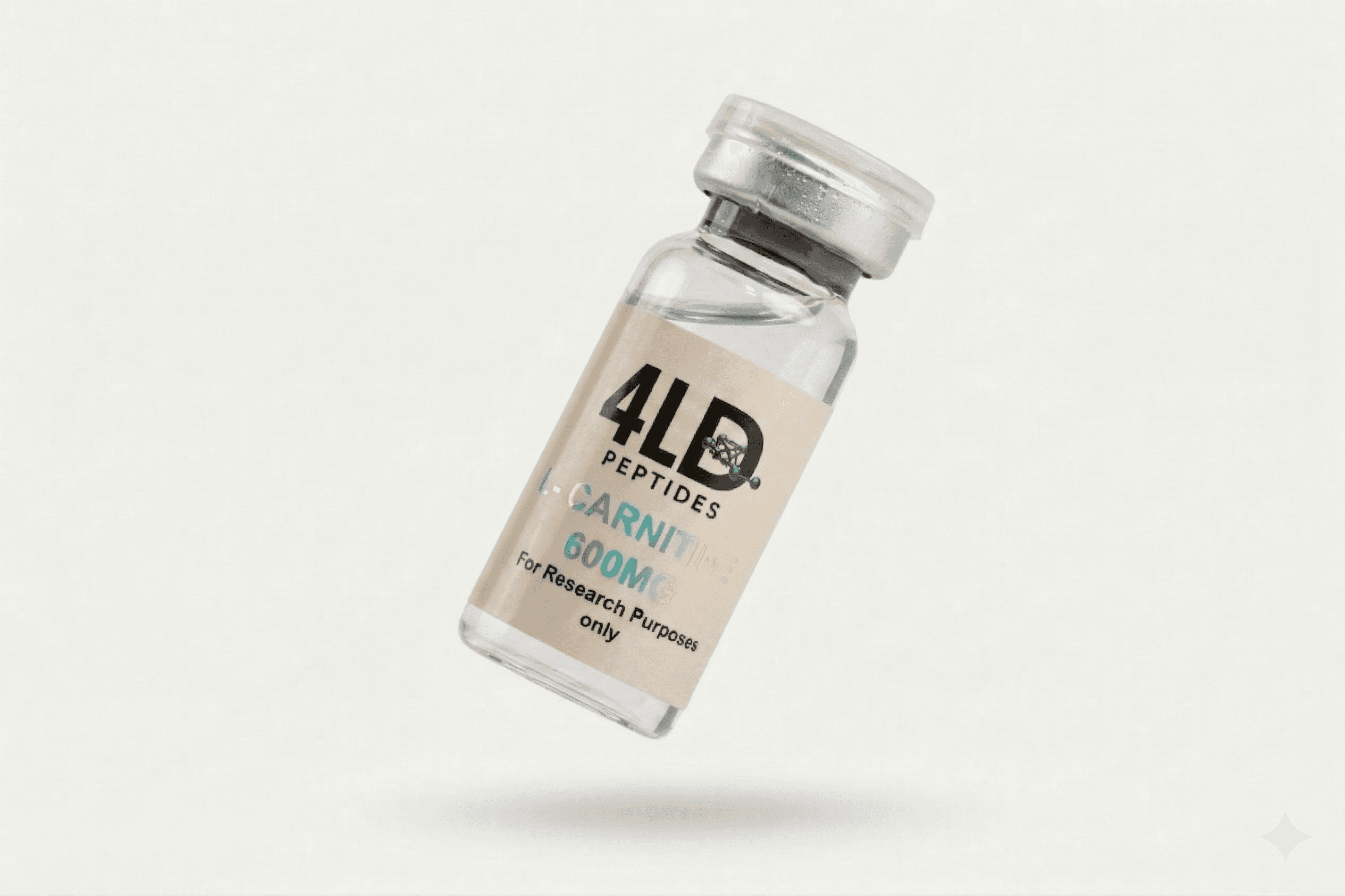
L-Carnitine — Research Overview
L-Carnitine is a naturally occurring quaternary ammonium compound biosynthesized from the amino acids lysine and methionine, and is found in high concentrations in tissues with elevated fatty acid oxidation demands including skeletal muscle, cardiac muscle, and the liver. Its primary function in cellular biology centers on its role as an essential carrier molecule for the transport of long-chain fatty acids across the inner mitochondrial membrane, where they undergo beta-oxidation to generate acetyl-CoA for entry into the citric acid cycle and subsequent ATP production. This function places L-Carnitine at the intersection of lipid metabolism, mitochondrial function, and cellular energy homeostasis, making it a widely studied compound across metabolic, neurological, and cardiovascular research. Available from 4-LD in lyophilized form, L-Carnitine is produced under quality-controlled conditions for qualified researchers and laboratory professionals conducting in-vitro research applications.
Areas of Active Research
L-Carnitine has been studied across several active research areas. In metabolic and energy research, cell culture and animal models have examined its role in facilitating long-chain fatty acid transport into the mitochondrial matrix, with studies in obesity and type 2 diabetes models investigating its influence on fatty acid oxidation efficiency, glucose metabolism, and insulin sensitivity through its effects on the acylcarnitine to free carnitine ratio and acetyl-CoA availability. In cardiovascular research, cardiac tissue models have studied its role in myocardial energy substrate utilization, with studies in ischemia-reperfusion models examining its potential to support cardiac function and reduce oxidative damage during periods of metabolic stress. In neurological research, acetyl-L-carnitine — the acetylated form — has been studied in neurodegenerative and aging models for its potential influence on acetylcholine synthesis, mitochondrial function in neurons, amyloid-beta toxicity, and cognitive performance in aged animal subjects. In exercise and muscle research, preclinical studies have examined its influence on muscle carnitine content, exercise-induced fat oxidation, lactate accumulation, and post-exercise recovery in controlled laboratory settings. All findings referenced are from preclinical and in-vitro studies. This product is intended solely for laboratory research by qualified professionals and is not for human or animal consumption. 4-LD makes no therapeutic claims regarding this compound.
l-carnitine-600mg
l-carnitine-600mg
l-carnitine-600mg
l-carnitine-600mg
l-carnitine-600mg
Warranty
Shipping details
Customer support
Loading stock...
L-Carnitine — Research Overview
L-Carnitine is a naturally occurring quaternary ammonium compound biosynthesized from the amino acids lysine and methionine, and is found in high concentrations in tissues with elevated fatty acid oxidation demands including skeletal muscle, cardiac muscle, and the liver. Its primary function in cellular biology centers on its role as an essential carrier molecule for the transport of long-chain fatty acids across the inner mitochondrial membrane, where they undergo beta-oxidation to generate acetyl-CoA for entry into the citric acid cycle and subsequent ATP production. This function places L-Carnitine at the intersection of lipid metabolism, mitochondrial function, and cellular energy homeostasis, making it a widely studied compound across metabolic, neurological, and cardiovascular research. Available from 4-LD in lyophilized form, L-Carnitine is produced under quality-controlled conditions for qualified researchers and laboratory professionals conducting in-vitro research applications.
Areas of Active Research
L-Carnitine has been studied across several active research areas. In metabolic and energy research, cell culture and animal models have examined its role in facilitating long-chain fatty acid transport into the mitochondrial matrix, with studies in obesity and type 2 diabetes models investigating its influence on fatty acid oxidation efficiency, glucose metabolism, and insulin sensitivity through its effects on the acylcarnitine to free carnitine ratio and acetyl-CoA availability. In cardiovascular research, cardiac tissue models have studied its role in myocardial energy substrate utilization, with studies in ischemia-reperfusion models examining its potential to support cardiac function and reduce oxidative damage during periods of metabolic stress. In neurological research, acetyl-L-carnitine — the acetylated form — has been studied in neurodegenerative and aging models for its potential influence on acetylcholine synthesis, mitochondrial function in neurons, amyloid-beta toxicity, and cognitive performance in aged animal subjects. In exercise and muscle research, preclinical studies have examined its influence on muscle carnitine content, exercise-induced fat oxidation, lactate accumulation, and post-exercise recovery in controlled laboratory settings. All findings referenced are from preclinical and in-vitro studies. This product is intended solely for laboratory research by qualified professionals and is not for human or animal consumption. 4-LD makes no therapeutic claims regarding this compound.
Discreet shipping
Fast shipping
High Quality
