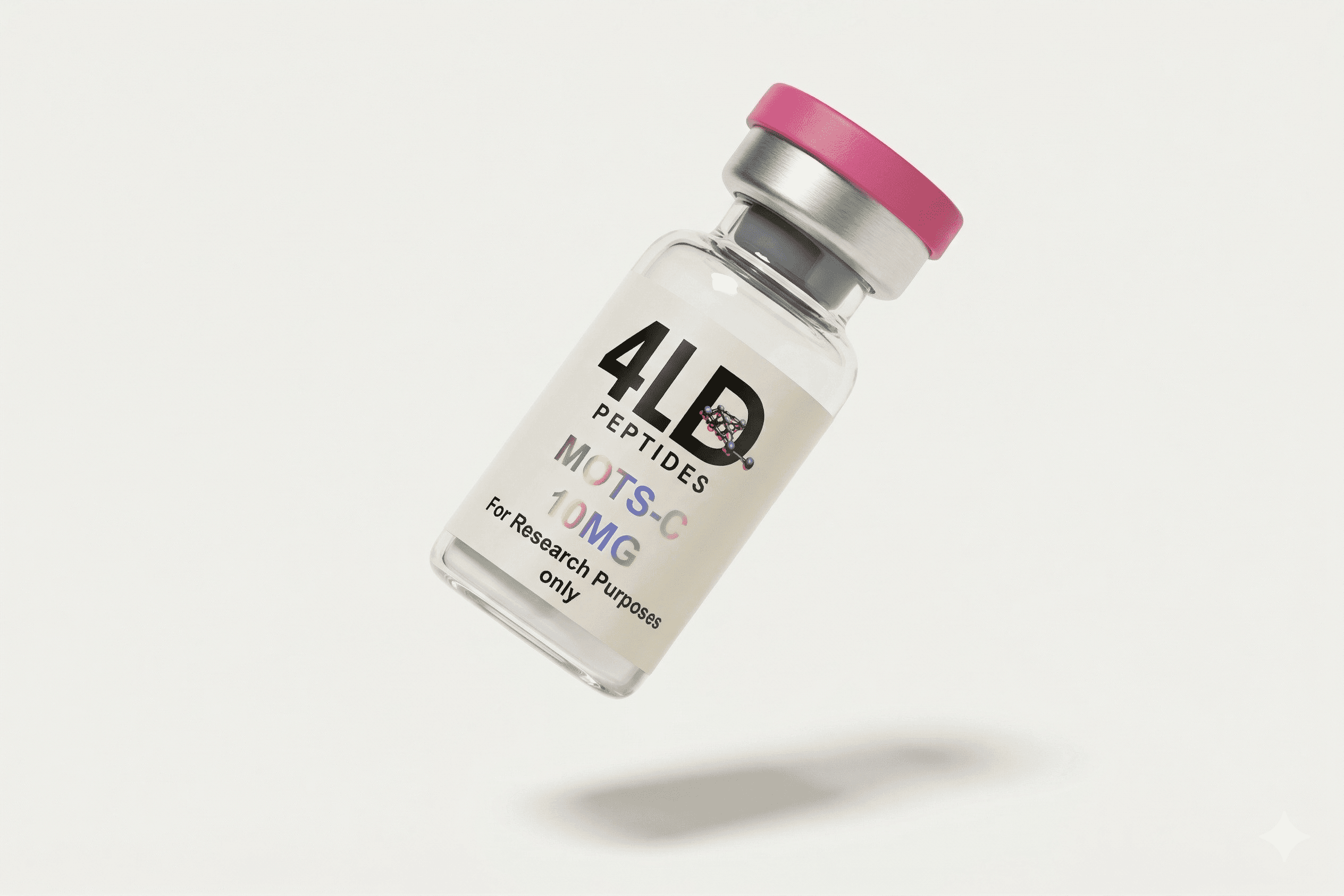
MOTS-C — Research Overview
MOTS-C (Mitochondrial Open Reading Frame of the 12S rRNA-c) is a 16-amino acid peptide encoded within the mitochondrial genome, making it distinct from nuclear-encoded peptides in its origin and regulatory function. This compound has emerged as a significant area of interest in metabolic, anti-aging, and exercise science research due to its observed role in regulating nuclear gene expression, glucose metabolism, and insulin sensitivity in laboratory models. Its ability to activate the AMPK pathway and modulate mitochondrial function has made it a widely referenced compound in studies examining age-related metabolic decline, obesity models, and mitochondrial dysfunction. Available from 4-LD in 10mg lyophilized form, MOTS-C is produced under quality-controlled conditions exclusively for qualified researchers and laboratory professionals conducting in-vitro and controlled research applications.
Areas of Active Research
MOTS-C has been studied across several active research areas. In metabolic research, studies have examined its activation of the AMPK pathway and its effects on glucose uptake and insulin sensitivity in skeletal muscle cell models, with findings in type 2 diabetes and obesity animal models suggesting associations with improved metabolic efficiency and GLUT4 translocation. In anti-aging and longevity research, preclinical studies in C. elegans and murine models have investigated its potential effects on lifespan extension, oxidative stress reduction, and cellular stress resistance through antioxidant pathway upregulation. In exercise and muscle performance research, animal studies have examined its potential influence on exercise endurance, ATP regeneration, muscle fatigue reduction, and post-exercise recovery in controlled laboratory settings. In neurological research, emerging preclinical studies have explored its potential role in reducing amyloid-beta accumulation in Alzheimer's models, improving hippocampal-dependent memory function in aged animal subjects, and modulating neuroinflammatory pathways including microglial activation. All findings referenced are from preclinical and in-vitro studies. This product is intended solely for laboratory research by qualified professionals and is not for human or animal consumption. 4-LD makes no therapeutic claims regarding this compound.
mots-c-10mg
mots-c-10mg
mots-c-10mg
mots-c-10mg
mots-c-10mg
Warranty
Shipping details
Customer support
Loading stock...
MOTS-C — Research Overview
MOTS-C (Mitochondrial Open Reading Frame of the 12S rRNA-c) is a 16-amino acid peptide encoded within the mitochondrial genome, making it distinct from nuclear-encoded peptides in its origin and regulatory function. This compound has emerged as a significant area of interest in metabolic, anti-aging, and exercise science research due to its observed role in regulating nuclear gene expression, glucose metabolism, and insulin sensitivity in laboratory models. Its ability to activate the AMPK pathway and modulate mitochondrial function has made it a widely referenced compound in studies examining age-related metabolic decline, obesity models, and mitochondrial dysfunction. Available from 4-LD in 10mg lyophilized form, MOTS-C is produced under quality-controlled conditions exclusively for qualified researchers and laboratory professionals conducting in-vitro and controlled research applications.
Areas of Active Research
MOTS-C has been studied across several active research areas. In metabolic research, studies have examined its activation of the AMPK pathway and its effects on glucose uptake and insulin sensitivity in skeletal muscle cell models, with findings in type 2 diabetes and obesity animal models suggesting associations with improved metabolic efficiency and GLUT4 translocation. In anti-aging and longevity research, preclinical studies in C. elegans and murine models have investigated its potential effects on lifespan extension, oxidative stress reduction, and cellular stress resistance through antioxidant pathway upregulation. In exercise and muscle performance research, animal studies have examined its potential influence on exercise endurance, ATP regeneration, muscle fatigue reduction, and post-exercise recovery in controlled laboratory settings. In neurological research, emerging preclinical studies have explored its potential role in reducing amyloid-beta accumulation in Alzheimer's models, improving hippocampal-dependent memory function in aged animal subjects, and modulating neuroinflammatory pathways including microglial activation. All findings referenced are from preclinical and in-vitro studies. This product is intended solely for laboratory research by qualified professionals and is not for human or animal consumption. 4-LD makes no therapeutic claims regarding this compound.
Discreet shipping
Fast shipping
High Quality
