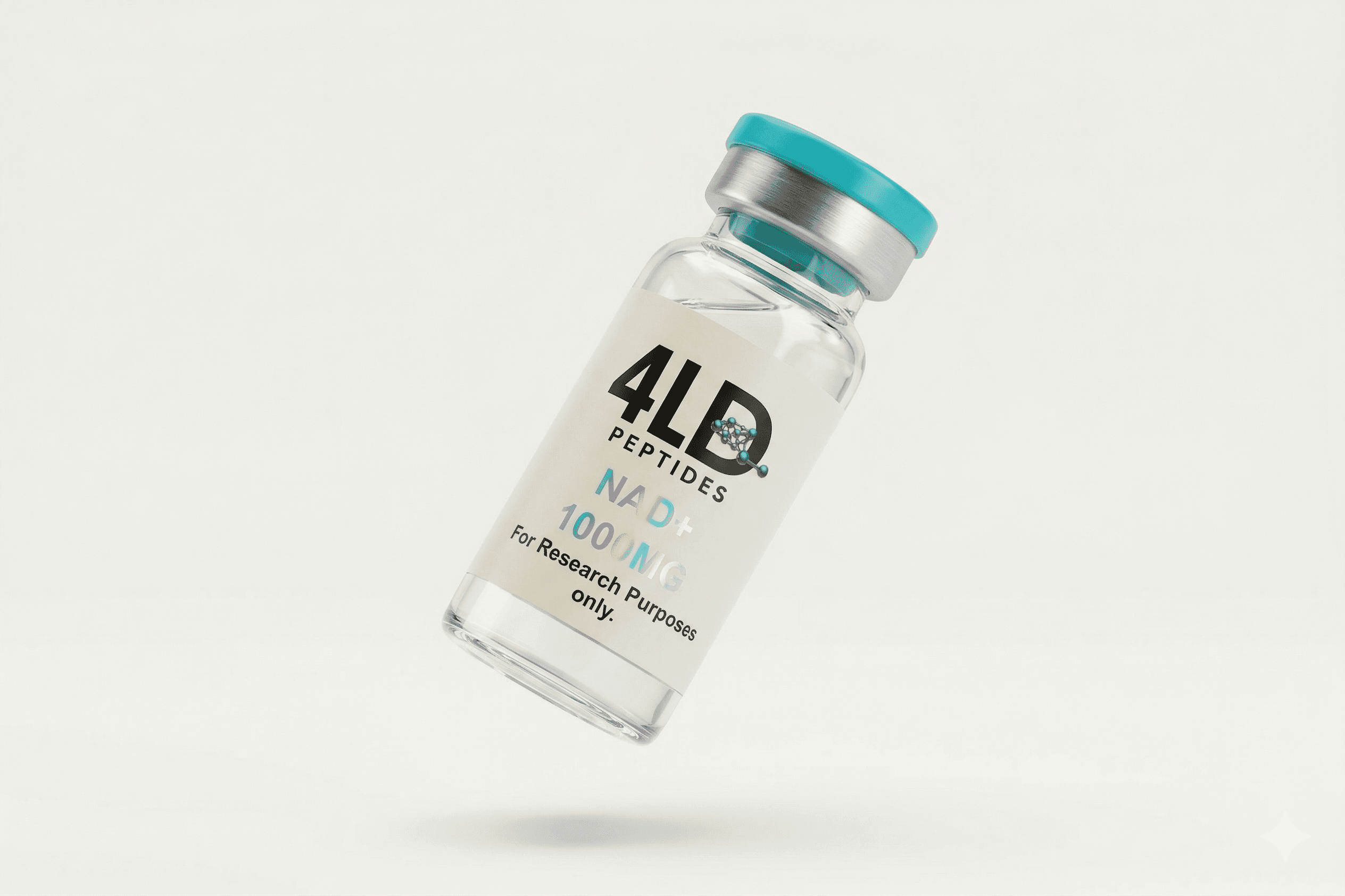
NAD+ — Research Overview
Beta-Nicotinamide Adenine Dinucleotide (NAD+) is an essential coenzyme found in every living cell, serving two primary functions in laboratory research contexts — as a critical electron carrier in redox reactions that fuel cellular energy production through the mitochondrial electron transport chain, and as an indispensable substrate for key signaling enzymes including sirtuins, PARP enzymes, and CD38. Its central role in linking cellular energy status to gene expression, DNA repair, and stress resistance has made it one of the most actively studied compounds in aging biology, metabolic research, and neurodegeneration. A well-documented hypothesis in biogerontology holds that NAD+ bioavailability declines with age, contributing to mitochondrial dysfunction, epigenetic alterations, and loss of cellular proteostasis. Available from 4-LD in 250mg lyophilized form, NAD+ is produced under quality-controlled conditions for qualified researchers and laboratory professionals conducting in-vitro research applications.
Areas of Active Research
NAD+ has been studied across several active research areas. In mitochondrial function research, studies have examined its role as a direct precursor to NADH in the electron transport chain and its activation of SIRT1 and SIRT3, which influence mitochondrial biogenesis through PGC-1α and related transcription factors, with findings in cell culture and animal models linking NAD+ availability to oxidative metabolism and insulin sensitivity. In DNA repair research, PARP enzyme studies have investigated how NAD+ availability influences the cellular response to genotoxic stress, with models involving UV radiation and chemical agents examining its role in facilitating DNA damage recognition and repair pathway activation. In sirtuin and longevity research, preclinical studies in C. elegans and mammalian cell models have examined how NAD+-dependent sirtuin activation influences gene expression, stress resistance, mitochondrial unfolded protein response, and FOXO signaling pathways associated with cellular aging. In neurological research, studies using Alzheimer's disease mouse models have explored how NAD+ supplementation influences tau pathology, DNA repair capacity, amyloid-beta toxicity, and neuronal survival under conditions of oxidative and metabolic stress. All findings referenced are from preclinical and in-vitro studies. This product is intended solely for laboratory research by qualified professionals and is not for human or animal consumption. 4-LD makes no therapeutic claims regarding this compound.
nad-1000mg
nad-1000mg
nad-1000mg
nad-1000mg
nad-1000mg
Warranty
Shipping details
Customer support
Loading stock...
NAD+ — Research Overview
Beta-Nicotinamide Adenine Dinucleotide (NAD+) is an essential coenzyme found in every living cell, serving two primary functions in laboratory research contexts — as a critical electron carrier in redox reactions that fuel cellular energy production through the mitochondrial electron transport chain, and as an indispensable substrate for key signaling enzymes including sirtuins, PARP enzymes, and CD38. Its central role in linking cellular energy status to gene expression, DNA repair, and stress resistance has made it one of the most actively studied compounds in aging biology, metabolic research, and neurodegeneration. A well-documented hypothesis in biogerontology holds that NAD+ bioavailability declines with age, contributing to mitochondrial dysfunction, epigenetic alterations, and loss of cellular proteostasis. Available from 4-LD in 250mg lyophilized form, NAD+ is produced under quality-controlled conditions for qualified researchers and laboratory professionals conducting in-vitro research applications.
Areas of Active Research
NAD+ has been studied across several active research areas. In mitochondrial function research, studies have examined its role as a direct precursor to NADH in the electron transport chain and its activation of SIRT1 and SIRT3, which influence mitochondrial biogenesis through PGC-1α and related transcription factors, with findings in cell culture and animal models linking NAD+ availability to oxidative metabolism and insulin sensitivity. In DNA repair research, PARP enzyme studies have investigated how NAD+ availability influences the cellular response to genotoxic stress, with models involving UV radiation and chemical agents examining its role in facilitating DNA damage recognition and repair pathway activation. In sirtuin and longevity research, preclinical studies in C. elegans and mammalian cell models have examined how NAD+-dependent sirtuin activation influences gene expression, stress resistance, mitochondrial unfolded protein response, and FOXO signaling pathways associated with cellular aging. In neurological research, studies using Alzheimer's disease mouse models have explored how NAD+ supplementation influences tau pathology, DNA repair capacity, amyloid-beta toxicity, and neuronal survival under conditions of oxidative and metabolic stress. All findings referenced are from preclinical and in-vitro studies. This product is intended solely for laboratory research by qualified professionals and is not for human or animal consumption. 4-LD makes no therapeutic claims regarding this compound.
Discreet shipping
Fast shipping
High Quality
