Retatrutide — Research Overview
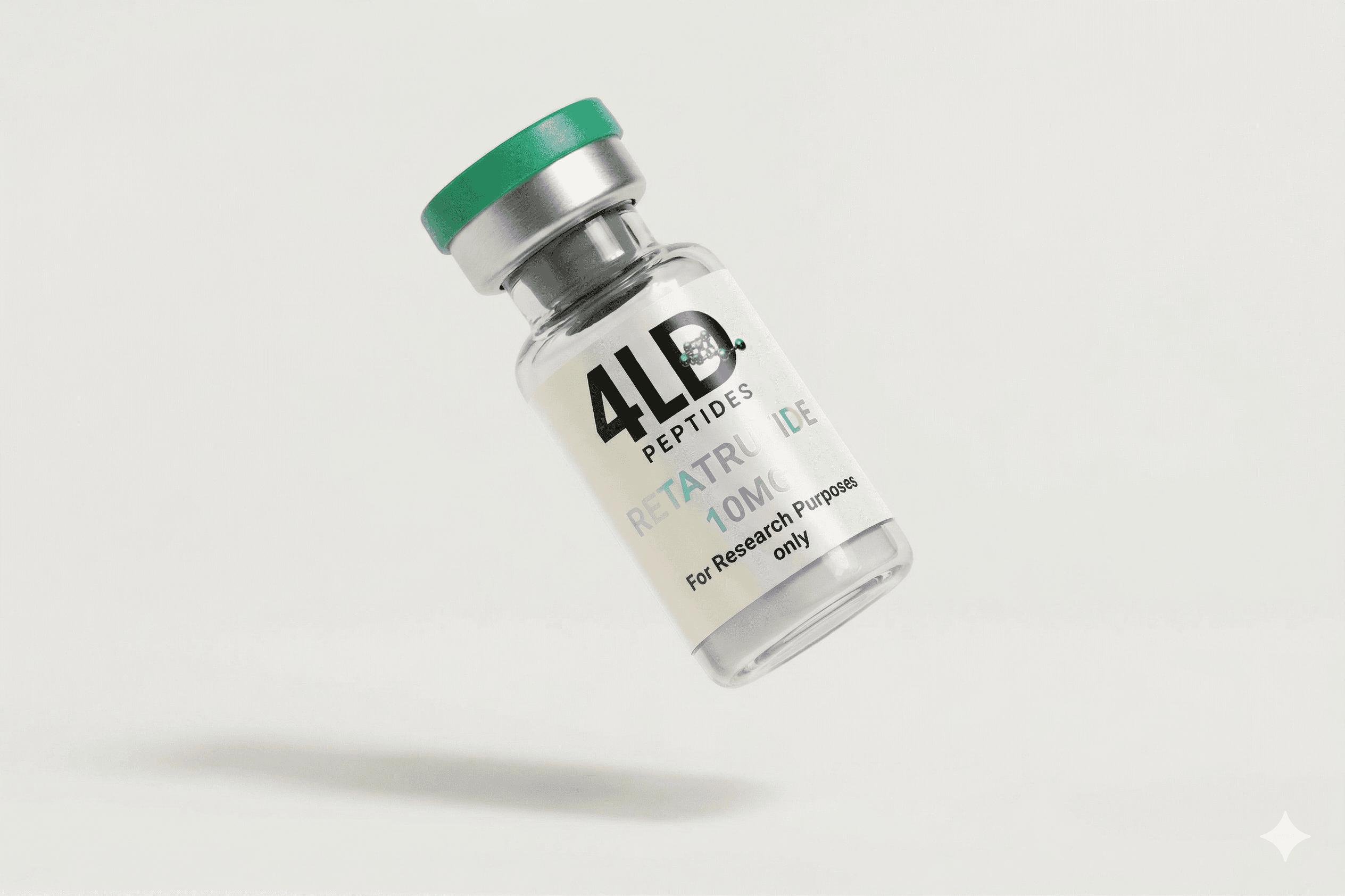
Retatrutide (LY3437943) is a next-generation synthetic peptide designed as a triple-receptor agonist targeting GLP-1, GIP, and glucagon receptors simultaneously. This multi-receptor approach distinguishes it from single and dual agonist compounds and has made it a compound of significant interest in metabolic research, where its combined mechanisms — enhanced insulin secretion through GLP-1 receptor activation, improved nutrient partitioning through GIP receptor modulation, and increased energy expenditure through glucagon receptor activity — offer researchers a tool for studying interconnected metabolic pathways in a single compound. Preclinical models have examined its effects on body weight regulation, glucose homeostasis, liver fat content, and lean mass preservation. Available from 4-LD in 10mg, 20mg, and 60mg lyophilized form, Retatrutide is produced under quality-controlled conditions exclusively for qualified researchers and laboratory professionals conducting in-vitro and controlled research applications.
Areas of Active Research
Retatrutide has been studied across several active research areas. In obesity and weight regulation research, primate and murine animal models have examined its effects on body weight reduction and visceral adipose tissue targeting, with comparative studies documenting its effects relative to other GLP-1 receptor agonists in controlled laboratory settings. In glucose metabolism research, diabetic animal models have investigated its influence on fasting glucose levels, insulin sensitivity measured by HOMA-IR scores, and glucose homeostasis through its combined receptor activity profile. In lipid metabolism research, non-alcoholic fatty liver disease models have examined its potential effects on liver fat content reduction and triglyceride levels through its glucagon receptor activity component. In cardiometabolic research, studies have explored its potential influence on cardiovascular risk markers and lean mass preservation during weight loss protocols in animal models, with findings suggesting differentiated effects compared to single-receptor agonist compounds. All findings referenced are from preclinical and in-vitro studies. This product is intended solely for laboratory research by qualified professionals and is not for human or animal consumption. 4-LD makes no therapeutic claims regarding this compound.
retatrutide-10mg
retatrutide-10mg
retatrutide-10mg
retatrutide-10mg
retatrutide-10mg
Warranty
Shipping details
Customer support
Loading stock...
Retatrutide — Research Overview
Retatrutide (LY3437943) is a next-generation synthetic peptide designed as a triple-receptor agonist targeting GLP-1, GIP, and glucagon receptors simultaneously. This multi-receptor approach distinguishes it from single and dual agonist compounds and has made it a compound of significant interest in metabolic research, where its combined mechanisms — enhanced insulin secretion through GLP-1 receptor activation, improved nutrient partitioning through GIP receptor modulation, and increased energy expenditure through glucagon receptor activity — offer researchers a tool for studying interconnected metabolic pathways in a single compound. Preclinical models have examined its effects on body weight regulation, glucose homeostasis, liver fat content, and lean mass preservation. Available from 4-LD in 10mg, 20mg, and 60mg lyophilized form, Retatrutide is produced under quality-controlled conditions exclusively for qualified researchers and laboratory professionals conducting in-vitro and controlled research applications.
Areas of Active Research
Retatrutide has been studied across several active research areas. In obesity and weight regulation research, primate and murine animal models have examined its effects on body weight reduction and visceral adipose tissue targeting, with comparative studies documenting its effects relative to other GLP-1 receptor agonists in controlled laboratory settings. In glucose metabolism research, diabetic animal models have investigated its influence on fasting glucose levels, insulin sensitivity measured by HOMA-IR scores, and glucose homeostasis through its combined receptor activity profile. In lipid metabolism research, non-alcoholic fatty liver disease models have examined its potential effects on liver fat content reduction and triglyceride levels through its glucagon receptor activity component. In cardiometabolic research, studies have explored its potential influence on cardiovascular risk markers and lean mass preservation during weight loss protocols in animal models, with findings suggesting differentiated effects compared to single-receptor agonist compounds. All findings referenced are from preclinical and in-vitro studies. This product is intended solely for laboratory research by qualified professionals and is not for human or animal consumption. 4-LD makes no therapeutic claims regarding this compound.
Discreet shipping
Fast shipping
High Quality
