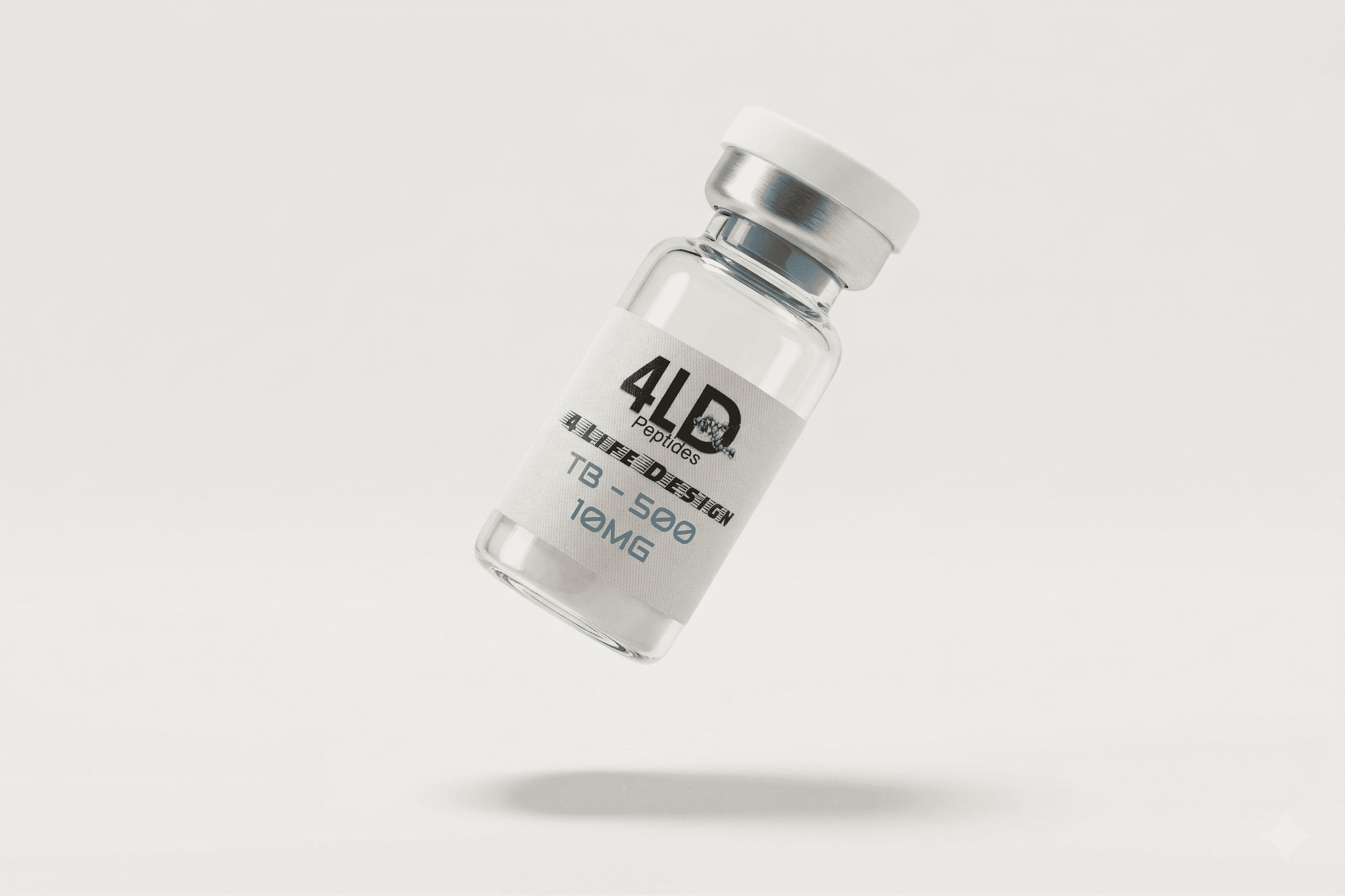
TB-500 (Thymosin Beta-4) — Research Overview
TB-500 (Thymosin Beta-4) is a naturally occurring 43-amino acid polypeptide that plays a central role in actin regulation, cell migration, and tissue repair processes. It has been studied extensively in preclinical laboratory settings for its broad systemic activity across multiple tissue types including tendons, ligaments, muscle, cardiovascular tissue, and the central nervous system. Its primary mechanism of research interest involves its interaction with G-actin, which influences cytoskeletal organization and cellular migration, as well as its observed effects on pro-inflammatory cytokine modulation and angiogenic pathway activation. Available from 4-LD in 5mg and 10mg lyophilized form, TB-500 is produced under quality-controlled conditions exclusively for qualified researchers and laboratory professionals conducting in-vitro and controlled research applications.
Areas of Active Research
B-500 has been studied across several active research areas. In wound healing and tissue regeneration research, fibroblast migration assays and animal models of diabetic ulcers, burns, and surgical recovery have examined its potential to accelerate tissue repair through keratinocyte proliferation stimulation and extracellular matrix remodeling. In musculoskeletal research, murine models of tendon and ligament injury have investigated its effects on local tissue repair and its ability to act as a chemoattractant for myoblasts in muscle injury models. In cardiovascular research, studies have examined its influence on endothelial cell migration, angiogenesis pathway activation, and potential cardioprotective effects in myocardial infarction models. In anti-inflammatory research, studies have documented its effects on reducing pro-inflammatory cytokines including IL-1β and TNF-α in tissue injury models, with findings suggesting a modulatory rather than suppressive role in the inflammatory response. In neurological research, preclinical studies have examined its potential neuroprotective and neurorestorative effects following traumatic brain injury and spinal cord injury in animal models. All findings referenced are from preclinical and in-vitro studies. This product is intended solely for laboratory research by qualified professionals and is not for human or animal consumption. 4-LD makes no therapeutic claims regarding this compound.
tb-500-4-10mg
tb-500-4-10mg
tb-500-4-10mg
tb-500-4-10mg
tb-500-4-10mg
Warranty
Shipping details
Customer support
Loading stock...
TB-500 (Thymosin Beta-4) — Research Overview
TB-500 (Thymosin Beta-4) is a naturally occurring 43-amino acid polypeptide that plays a central role in actin regulation, cell migration, and tissue repair processes. It has been studied extensively in preclinical laboratory settings for its broad systemic activity across multiple tissue types including tendons, ligaments, muscle, cardiovascular tissue, and the central nervous system. Its primary mechanism of research interest involves its interaction with G-actin, which influences cytoskeletal organization and cellular migration, as well as its observed effects on pro-inflammatory cytokine modulation and angiogenic pathway activation. Available from 4-LD in 5mg and 10mg lyophilized form, TB-500 is produced under quality-controlled conditions exclusively for qualified researchers and laboratory professionals conducting in-vitro and controlled research applications.
Areas of Active Research
B-500 has been studied across several active research areas. In wound healing and tissue regeneration research, fibroblast migration assays and animal models of diabetic ulcers, burns, and surgical recovery have examined its potential to accelerate tissue repair through keratinocyte proliferation stimulation and extracellular matrix remodeling. In musculoskeletal research, murine models of tendon and ligament injury have investigated its effects on local tissue repair and its ability to act as a chemoattractant for myoblasts in muscle injury models. In cardiovascular research, studies have examined its influence on endothelial cell migration, angiogenesis pathway activation, and potential cardioprotective effects in myocardial infarction models. In anti-inflammatory research, studies have documented its effects on reducing pro-inflammatory cytokines including IL-1β and TNF-α in tissue injury models, with findings suggesting a modulatory rather than suppressive role in the inflammatory response. In neurological research, preclinical studies have examined its potential neuroprotective and neurorestorative effects following traumatic brain injury and spinal cord injury in animal models. All findings referenced are from preclinical and in-vitro studies. This product is intended solely for laboratory research by qualified professionals and is not for human or animal consumption. 4-LD makes no therapeutic claims regarding this compound.
Discreet shipping
Fast shipping
High Quality
