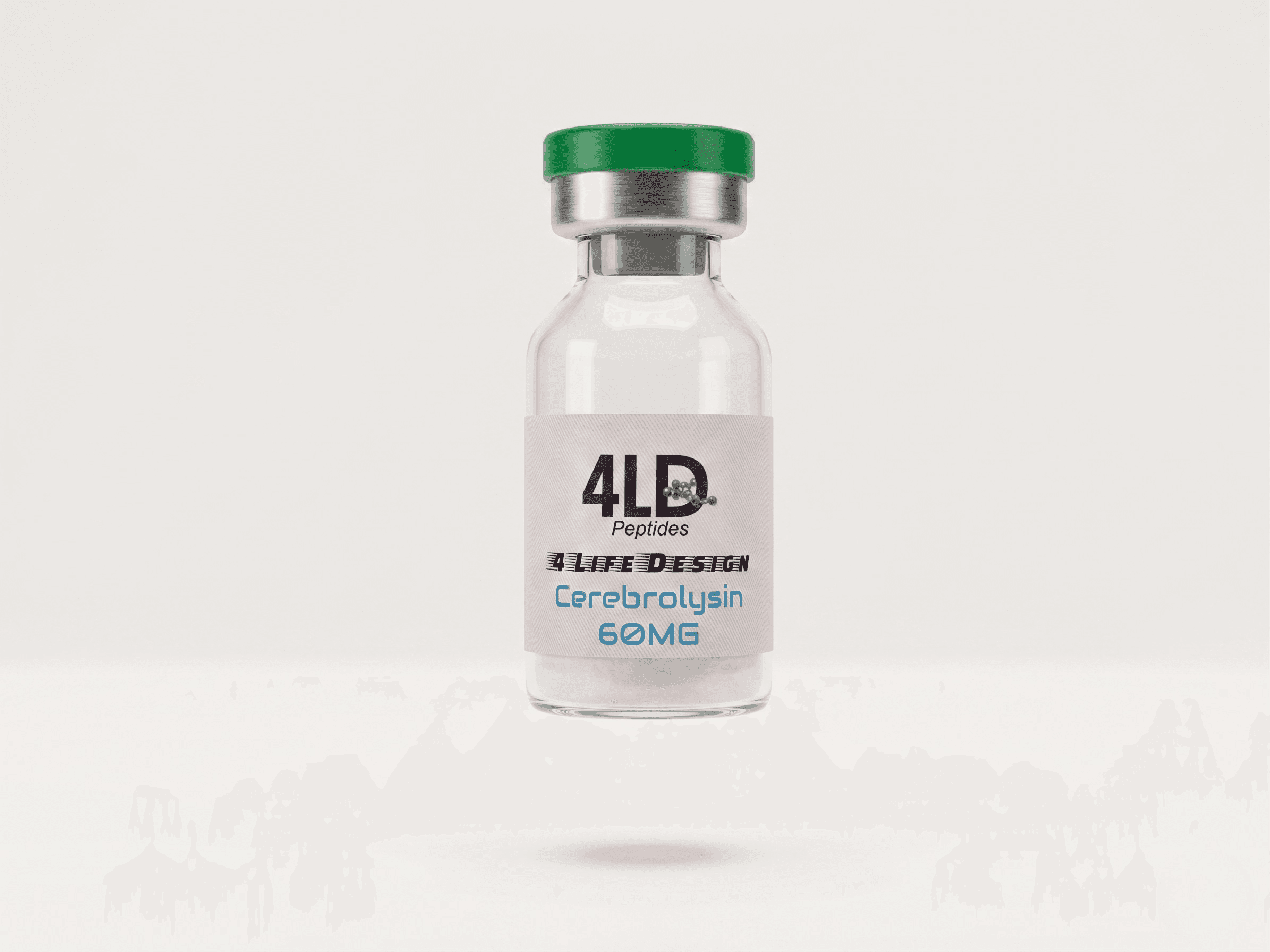
Cerebrolysin — Research Overview
Cerebrolysin is a research-grade stabilized peptide fraction derived from purified porcine brain proteins, standardized to an equivalent peptide concentration. It represents a unique class of research compounds known as neuropeptides, characterized by a complex composition of low-molecular-weight peptides and neurotrophic factors. Unlike single-molecule compounds, Cerebrolysin's research value lies in its multifaceted activity across multiple neurobiological pathways simultaneously. Its mechanisms — as observed in in-vitro and preclinical models — are primarily attributed to its mimicry of endogenous neurotrophic factors including NGF, BDNF, and GDNF, making it a widely referenced tool for researchers investigating complex neurological processes that cannot be fully replicated by single-target agents. Available from 4-LD in lyophilized powder form, Cerebrolysin is produced under quality-controlled conditions exclusively for qualified researchers and laboratory professionals conducting in-vitro research applications.
Areas of Active Research
Cerebrolysin has been studied across several active research areas. In neuroprotection research, in-vitro studies using cortical neuron cultures have examined its protective effects against glutamate-induced excitotoxicity and oxidative stress, with findings documenting increased neuronal survival, reduced markers of cell damage, and attenuation of calpain activation following exposure to excitotoxic conditions. In Alzheimer's disease research, preclinical studies have investigated its potential to interact with amyloid-beta peptides, with findings suggesting it may reduce the accumulation of toxic amyloid-beta oligomers and mitigate synaptotoxic effects in cell culture models through modulation of amyloid precursor protein processing pathways. In synaptogenesis and synaptic plasticity research, studies have examined its effects on synaptic protein expression including synaptophysin and PSD-95, with findings suggesting a direct role in promoting synaptic stability and neuronal differentiation in hippocampal and neural stem cell culture models. In traumatic brain injury and stroke research, preclinical ischemia models have investigated its influence on neural progenitor cell proliferation, neurogenesis, and functional recovery following oxygen-glucose deprivation and focal cerebral ischemia conditions. In combination research, studies have explored its potential synergistic effects when studied alongside other neurotrophic research compounds targeting complementary pathways including neuroinflammation and cellular energy metabolism. All findings referenced are from preclinical and in-vitro studies. This product is intended solely for laboratory research by qualified professionals and is not for human or animal consumption. 4-LD makes no therapeutic claims regarding this compound.
Cerebrolysin
Studied for neuroprotection against excitotoxicity, oxidative stress, and amyloid-beta toxicity in Alzheimer's disease models
Researched for synaptogenesis, neuronal differentiation, traumatic brain injury, and stroke model recovery studies
$177.00
EMAIL TO ORDER
Cerebrolysin — Research Overview
Cerebrolysin is a research-grade stabilized peptide fraction derived from purified porcine brain proteins, standardized to an equivalent peptide concentration. It represents a unique class of research compounds known as neuropeptides, characterized by a complex composition of low-molecular-weight peptides and neurotrophic factors. Unlike single-molecule compounds, Cerebrolysin's research value lies in its multifaceted activity across multiple neurobiological pathways simultaneously. Its mechanisms — as observed in in-vitro and preclinical models — are primarily attributed to its mimicry of endogenous neurotrophic factors including NGF, BDNF, and GDNF, making it a widely referenced tool for researchers investigating complex neurological processes that cannot be fully replicated by single-target agents. Available from 4-LD in lyophilized powder form, Cerebrolysin is produced under quality-controlled conditions exclusively for qualified researchers and laboratory professionals conducting in-vitro research applications.
Areas of Active Research
Cerebrolysin has been studied across several active research areas. In neuroprotection research, in-vitro studies using cortical neuron cultures have examined its protective effects against glutamate-induced excitotoxicity and oxidative stress, with findings documenting increased neuronal survival, reduced markers of cell damage, and attenuation of calpain activation following exposure to excitotoxic conditions. In Alzheimer's disease research, preclinical studies have investigated its potential to interact with amyloid-beta peptides, with findings suggesting it may reduce the accumulation of toxic amyloid-beta oligomers and mitigate synaptotoxic effects in cell culture models through modulation of amyloid precursor protein processing pathways. In synaptogenesis and synaptic plasticity research, studies have examined its effects on synaptic protein expression including synaptophysin and PSD-95, with findings suggesting a direct role in promoting synaptic stability and neuronal differentiation in hippocampal and neural stem cell culture models. In traumatic brain injury and stroke research, preclinical ischemia models have investigated its influence on neural progenitor cell proliferation, neurogenesis, and functional recovery following oxygen-glucose deprivation and focal cerebral ischemia conditions. In combination research, studies have explored its potential synergistic effects when studied alongside other neurotrophic research compounds targeting complementary pathways including neuroinflammation and cellular energy metabolism. All findings referenced are from preclinical and in-vitro studies. This product is intended solely for laboratory research by qualified professionals and is not for human or animal consumption. 4-LD makes no therapeutic claims regarding this compound.
Discreet shipping
Fast shipping
High Quality
