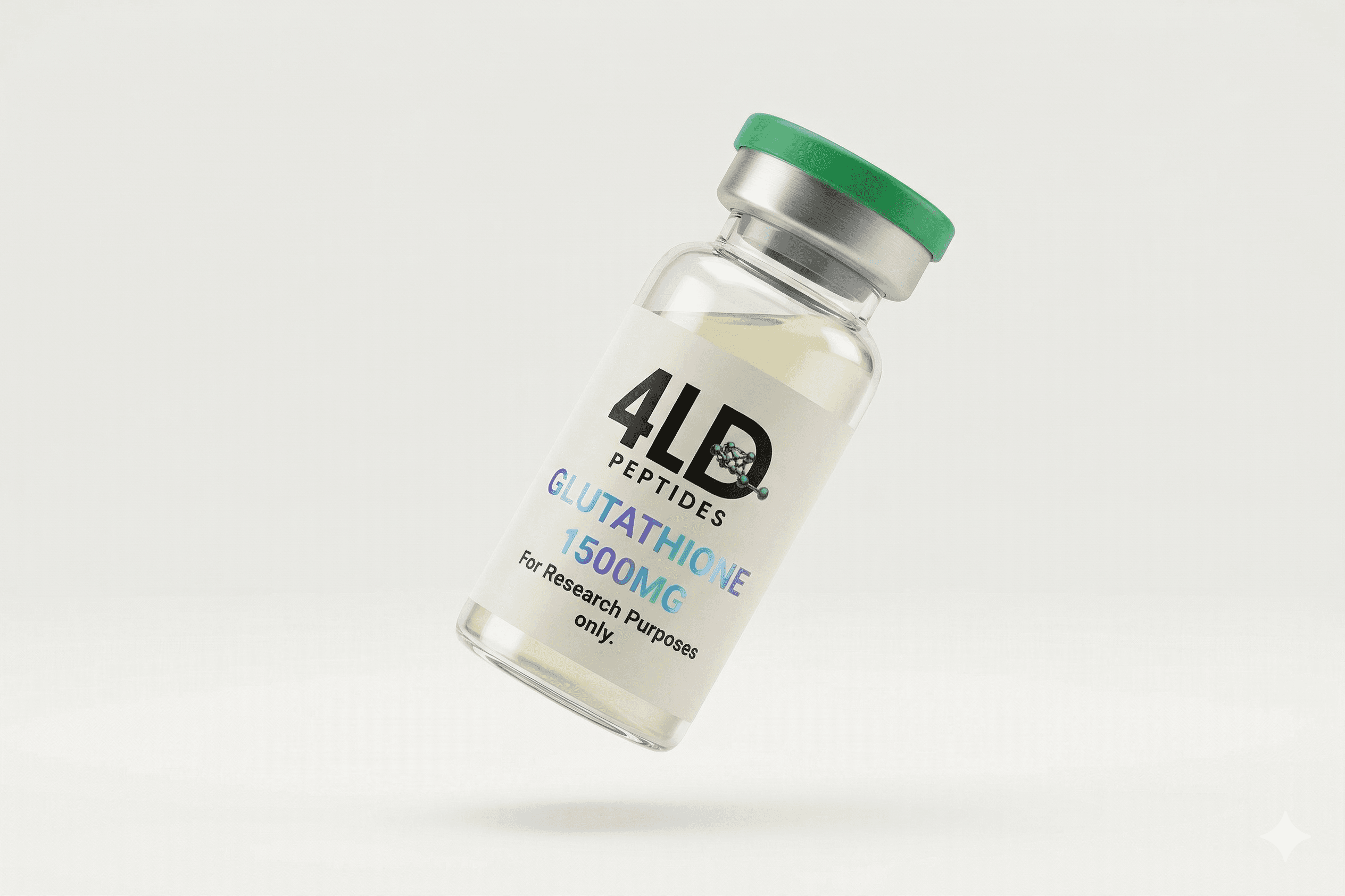
Glutathione — Research Overview
Reduced L-Glutathione (GSH) is a tripeptide composed of gamma-L-glutamyl-L-cysteinylglycine and is ubiquitously present in mammalian cells. Widely referenced in research literature as the body's primary endogenous antioxidant, it plays a central role in maintaining cellular redox homeostasis, supporting detoxification pathways, and modulating immune cell function. Its thiol group makes it a potent reducing agent capable of neutralizing reactive oxygen species, and it serves as a critical cofactor for key antioxidant enzymes including glutathione peroxidase and glutaredoxin. Available from 4-LD in 1500mg lyophilized form, Glutathione is produced under quality-controlled conditions and provided in a high-volume format suitable for extensive in-vitro research applications by qualified laboratory professionals.
Areas of Active Research
Glutathione has been studied across several active research areas. In oxidative stress research, laboratory studies have used GSH as both an intervention and a measurement tool in cell culture models exposed to pro-oxidants, examining endpoints including cell viability, lipid peroxidation, protein carbonylation, and intracellular GSH to GSSG ratios as indicators of redox state. In liver detoxification and toxicology research, studies have investigated its role in Phase II conjugation pathways, where glutathione S-transferase enzymes conjugate GSH to electrophilic toxins and xenobiotics to facilitate cellular excretion, with hepatocyte models including acetaminophen and ethanol toxicity being commonly referenced applications. In immunology research, studies examining immune cell function have explored how intracellular glutathione levels in antigen-presenting cells and macrophages influence cytokine secretion profiles and the balance between pro-inflammatory and anti-inflammatory responses. In mitochondrial and cellular aging research, GSH has been studied as a marker and modulator of oxidative damage in models of neurodegeneration, metabolic disease, and age-related cellular decline. All findings referenced are from preclinical and in-vitro studies. This product is intended solely for laboratory research by qualified professionals and is not for human or animal consumption. 4-LD makes no therapeutic claims regarding this compound.
Glutathione 600 MG or 1500MG
Studied for oxidative stress, free radical scavenging, and cellular redox state research
Researched for liver detoxification pathways, immunomodulation, and inflammation studies
$95.00
To place an order or ask a question about this product, reach out directly at support@4ld.com and we'll get back to you promptly.
EMAIL TO ORDER
Glutathione — Research Overview
Reduced L-Glutathione (GSH) is a tripeptide composed of gamma-L-glutamyl-L-cysteinylglycine and is ubiquitously present in mammalian cells. Widely referenced in research literature as the body's primary endogenous antioxidant, it plays a central role in maintaining cellular redox homeostasis, supporting detoxification pathways, and modulating immune cell function. Its thiol group makes it a potent reducing agent capable of neutralizing reactive oxygen species, and it serves as a critical cofactor for key antioxidant enzymes including glutathione peroxidase and glutaredoxin. Available from 4-LD in 1500mg lyophilized form, Glutathione is produced under quality-controlled conditions and provided in a high-volume format suitable for extensive in-vitro research applications by qualified laboratory professionals.
Areas of Active Research
Glutathione has been studied across several active research areas. In oxidative stress research, laboratory studies have used GSH as both an intervention and a measurement tool in cell culture models exposed to pro-oxidants, examining endpoints including cell viability, lipid peroxidation, protein carbonylation, and intracellular GSH to GSSG ratios as indicators of redox state. In liver detoxification and toxicology research, studies have investigated its role in Phase II conjugation pathways, where glutathione S-transferase enzymes conjugate GSH to electrophilic toxins and xenobiotics to facilitate cellular excretion, with hepatocyte models including acetaminophen and ethanol toxicity being commonly referenced applications. In immunology research, studies examining immune cell function have explored how intracellular glutathione levels in antigen-presenting cells and macrophages influence cytokine secretion profiles and the balance between pro-inflammatory and anti-inflammatory responses. In mitochondrial and cellular aging research, GSH has been studied as a marker and modulator of oxidative damage in models of neurodegeneration, metabolic disease, and age-related cellular decline. All findings referenced are from preclinical and in-vitro studies. This product is intended solely for laboratory research by qualified professionals and is not for human or animal consumption. 4-LD makes no therapeutic claims regarding this compound.
Discreet shipping
Fast shipping
High Quality
